
Tower Cleaning Robot
Wall-Climbing Spray Drying Tower Cleaning Robot
Description
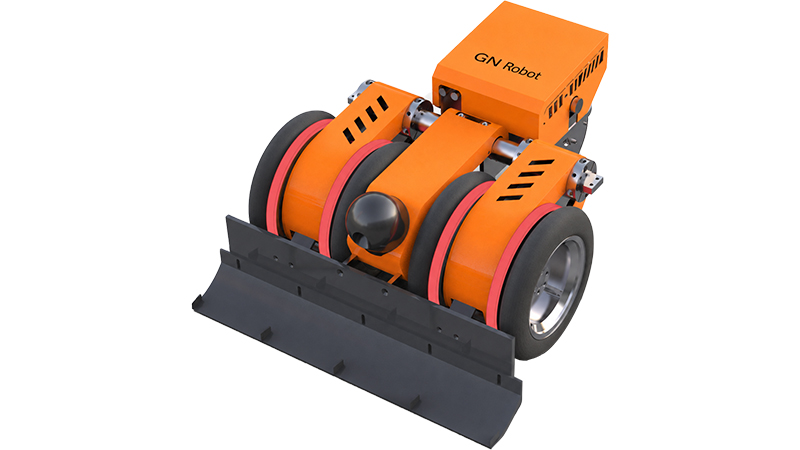
GN Spray Drying Tower Cleaning Robot is a wall-climbing cleaning system developed for removing accumulated powder, hardened deposits and solid residues from the internal walls of large steel spray drying towers, raw-material silos and similar process vessels. Typical users include detergent, home-care, FMCG and powder-processing plants where internal buildup can reduce usable volume, contaminate product, interfere with process performance or require frequent shutdown cleaning.
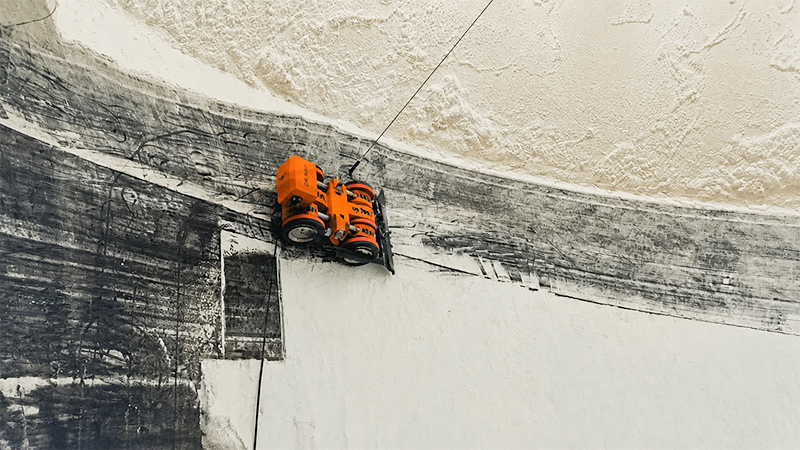
Traditional cleaning often requires personnel to enter a confined space and work at height inside a dusty vessel. The GN robot uses magnetic adhesion to climb ferromagnetic steel walls and carries an adjustable shovel-type cleaning module. Operators can control the robot remotely and monitor the internal operation through a 360-degree camera system, reducing direct exposure to difficult and hazardous cleaning conditions.
Customer Challenges
- Hardened powder and caked deposits can accumulate on tower and silo walls and become difficult to remove manually.
- Confined-space entry requires permits, gas testing, rescue preparation and strict supervision.
- Internal tower geometry and height make access difficult and time-consuming.
- Dust, falling material and limited visibility create additional safety risks for cleaning personnel.
- Long cleaning shutdowns reduce production availability and can delay product changeover or maintenance.
- GN Wall-Climbing Spray Drying Tower Cleaning Robot
GN Wall-Climbing Spray Drying Tower Cleaning Robotic Solution
The robot is introduced into the tower or silo and magnetically attaches to a suitable steel wall. Its front shovel/scraper module mechanically removes accumulated deposits as the crawler moves along the surface. The cleaning head height can be adjusted to accommodate uneven buildup and local transitions.
A 360-degree visual monitoring system allows the operator to observe the robot and cleaning area in real time. The reference system is rated for cleaning efficiency up to approximately 180 m²/h under suitable deposit and surface conditions. For safe deployment, the vessel material, wall thickness, diameter, internal fixtures, product residue characteristics and confined-space procedures must be reviewed before use.

Key Features & Advantages
Magnetic Wall-Climbing Inside Steel Towers: The crawler adheres to ferromagnetic internal walls and can move over large vertical and curved surfaces.
Adjustable Shovel-Type Cleaning Module: A mechanical scraping / shoveling attachment removes caked powder, hardened residues and solid buildup.
High Load Capacity: A 150 kg rated load supports robust cleaning attachments and helps maintain stable operation against deposits.
360-Degree Visual Monitoring: A panoramic camera system provides real-time observation of robot position, deposit condition and cleaning progress.
Obstacle Crossing: The crawler is designed to pass reference weld seams up to approximately 10 mm, helping it move across fabricated tower sections.
Up to 180 m²/h Reference Cleaning Rate: High productivity can shorten tower cleaning time compared with manual scraping in suitable conditions.
Remote Operation: Operators can perform the main cleaning task without remaining continuously on the tower wall inside the confined space.
Adaptable to Large Process Vessels: The system can be evaluated for spray towers, raw-material silos and other large steel vessels with compatible geometry and magnetic surfaces.
Technical Specifications
| Parameter | Specification/ Reference Value |
|---|---|
| Overall dimensions | Approx. 1000 x 750 x 440 mm |
| Robot weight | Approx. 80 kg |
| Rated load capacity | 150 kg |
| Travel speed | 0-4 m/min adjustable |
| Protection rating | IP65 |
| Obstacle crossing | Approx. 10 mm weld seam |
| Visual monitoring | 360-degree real-time monitoring |
| Reference cleaning efficiency | Up to 180 m²/h under suitable conditions |
| Reference vessel size | Large steel tower / vessel; product manual references diameter >=12 m |
| Cleaning method | Mechanical shovel / scraping module; customized end tools possible |
Note: Specifications are for reference only. Final configuration is subject to engineering confirmation and project requirements.
Typical Applications
Detergent Spray Drying Towers: Removal of detergent powder buildup and caked material from internal steel tower walls.
Raw-Material Silos: Cleaning of solid residues from large steel silos and powder storage vessels.
FMCG Powder Processing: Maintenance cleaning in large steel process vessels used for dry powder handling or production.
Industrial Steel Vessels: Selected internal deposit-removal tasks where magnetic adhesion, geometry and material compatibility are confirmed.
Customer Benefits
- Reduce the amount of manual high-altitude scraping inside confined vessels.
- Shorten cleaning and turnaround time on large accessible wall areas.
- Improve operator visibility through real-time internal camera monitoring.
- Reduce worker exposure to falling deposits and dusty surfaces.
- Use a repeatable mechanical cleaning process rather than relying entirely on manual scraping.
- Support planned preventive cleaning to avoid severe buildup and prolonged shutdowns.
Information Needed for Selection & Quotation
- Tower / silo material and confirmation that the wall is ferromagnetic steel.
- Internal diameter, height, cone sections, transitions and access opening dimensions.
- Location and height of weld seams, stiffeners, nozzles and internal obstacles.
- Residue type, hardness, thickness, moisture and adhesion strength.
- Required cleanliness and whether dry mechanical cleaning is acceptable.
- Dust control, ventilation, isolation and confined-space permit requirements.
- Product hygiene / cross-contamination requirements and cleaning validation.
- Power, tether routing, fall arrest, camera requirements and cleaning schedule.
Frequently Asked Questions
Can the robot work in any spray dryer?
No. The robot requires compatible magnetic steel surfaces and sufficient geometry for the crawler and cleaning module. Stainless grades with low magnetic response, non-metallic liners or complex internals require engineering review.
What kind of deposits can it remove?
It is intended for caked powder and solid residues that can be mechanically scraped or shoveled. Extremely hard sintered deposits may require another tool or a combined cleaning method.
Does it eliminate confined-space entry completely?
It can greatly reduce direct manual wall cleaning, but site procedures may still require personnel for setup, inspection, recovery or other tasks. Confined-space rules remain applicable.
How is cleaning progress monitored?
A 360-degree camera provides real-time visual feedback so the operator can follow robot movement and identify areas requiring additional passes.
What information is needed before quotation?
Provide vessel drawings, access opening size, diameter/height, wall material, internal photos, deposit description, cleaning frequency and target cleanliness.
Talk to GN Smart Control
Send GN your spray tower or silo drawings, wall material, internal diameter, access opening size, deposit photos and cleaning requirements. We can evaluate robot access, adhesion, cleaning tool selection and an operating plan for your plant.