
Rust Removal Robots
Rust Removal & Blasting Robot for Ship Hulls and Storage Tanks
Description
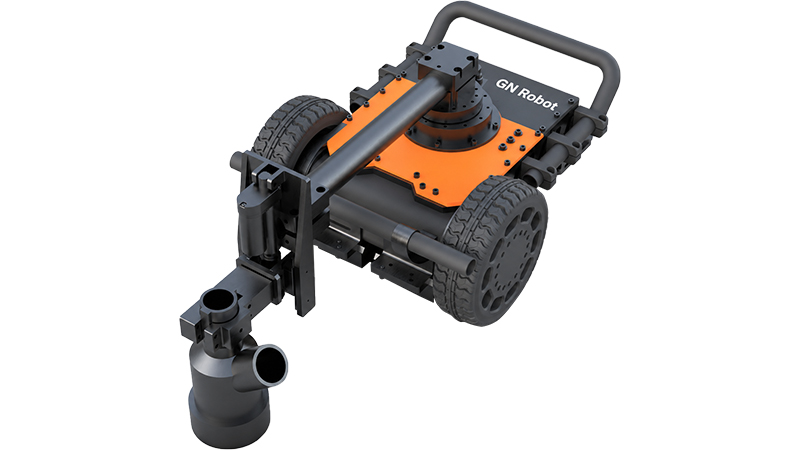
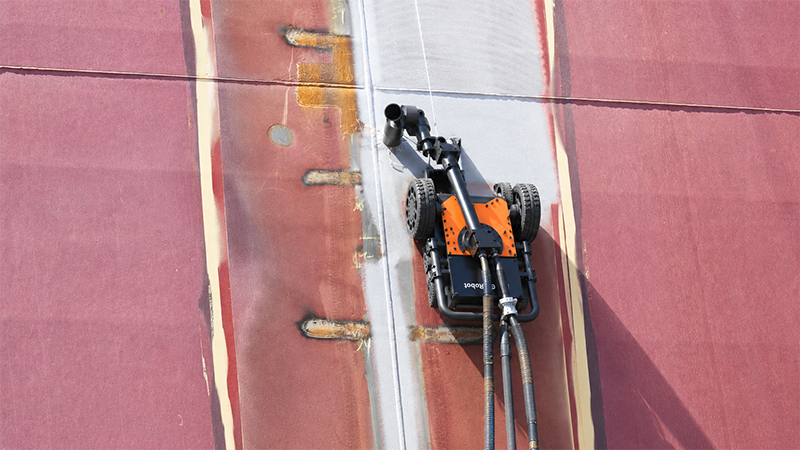
GN Rust Removal Robot is a magnetic wall-climbing abrasive blasting platform for ship hulls, storage tank shells, welding areas and other large ferromagnetic steel structures. It carries the blasting nozzles on the robot so heavy, hazardous blasting work can be performed remotely instead of requiring operators to hold blasting hoses at height for extended periods.
A multifunction swing arm provides a wide reciprocating blasting pattern and can support synchronized blasting guns. The robot can be configured for open abrasive blasting or integrated with a recyclable / recovery blasting arrangement for improved containment and waste management. Controlled travel speed and programmed arm movement help deliver repeatable surface preparation over large areas before painting or corrosion-protection work.
Customer Challenges
- Manual abrasive blasting is physically demanding and exposes workers to high noise, dust, rebound abrasive and high-pressure hoses.
- Ship hulls and tanks require extensive access systems and large crews for vertical surface blasting.
- Blasting quality varies if nozzle distance, angle and traverse speed change continuously.
- Open blasting generates significant abrasive and coating debris that must be controlled and recovered.
- Shipyard and tank maintenance schedules require rapid surface preparation to minimize docking or shutdown time.
GN Rust Removal Robotic Solution
The robot uses permanent magnetic adhesion to carry the blasting arm on the steel surface. The swing arm moves the nozzle path across a wide strip while the crawler advances at a controlled speed. The operator controls the robot remotely and can adjust travel and blasting parameters to suit corrosion level, coating thickness, abrasive type and required surface cleanliness.
For projects requiring better containment, the robot can be integrated with a recyclable abrasive or recovery blasting arrangement. Final blast quality depends on abrasive, air supply, nozzle size, substrate condition and process settings; GN can coordinate the robot configuration with the customer’s blasting equipment.

Key Features & Advantages
Wide Swing-Arm Blasting Pattern: A 0-150 degree arm sweep provides a large treatment envelope and reduces the number of crawler passes.
Open or Recovery Blasting Options: Reference working width is up to 1600 mm for open blasting and approximately 800 mm for recovery-style blasting configurations.
High Payload Capacity: A 100 kg rated load supports blasting guns, arm assemblies and related process equipment.
Magnetic Wall-Climbing Platform: Permanent magnetic adhesion keeps the robot attached to ferromagnetic ship and tank surfaces during vertical operation.
Remote Wireless Control: The operator can remain outside the direct blasting zone and control travel from a safer position.
Consistent Surface Preparation: Controlled nozzle sweep and robot travel help stabilize dwell time and coverage compared with purely manual blasting.
Sa 2.5 Capability by Process Configuration: The supplied product material positions the system for industrial blast cleaning up to Sa 2.5 when the overall blasting process is properly configured and verified.
Modular Process Integration: GN can interface the robot with customer blasting pots, compressors, abrasive recovery systems and hose-management arrangements.
Technical Specifications
| Parameter | Specification / Reference Value |
|---|---|
| Overall dimensions | Approx. 600 x 470 x 330 mm |
| Robot weight | Approx. 70 kg |
| Rated load capacity | 100 kg |
| Travel speed | 0-14 m/min adjustable |
| Swing-arm range | 0-150 degrees |
| Communication | Wireless remote control |
| Working width - open blasting | Up to approx. 1600 mm |
| Working width - recovery blasting | Approx. 800 mm |
| Surface suitability | Large vertical steel surfaces; reference tank diameter >=8 m |
| Reference finish | Industrial abrasive blasting; Sa 2.5 achievable subject to full process configuration and verification |
Note: Specifications are for reference only. Final configuration is subject to engineering confirmation and project requirements.
Typical Applications
Ship Hull Rust and Coating Removal: Abrasive blasting of large hull plate areas during dry-dock maintenance and repainting.
Block Assembly and Weld Areas: Surface preparation around weld seams and steel block assembly areas in shipbuilding.
Storage Tank Exterior Blasting: Removal of rust and deteriorated coating from tank shells before recoating.
Large Steel Structures: Robotic blasting of accessible plate structures where magnetic adhesion and safety arrangements can be established.
Customer Benefits
- Keep operators farther from abrasive rebound, dust and high-pressure blasting hoses.
- Reduce scaffolding and aerial-lift demand on large suitable steel surfaces.
- Increase consistency of nozzle sweep and blasting coverage.
- Support wider treatment paths and higher productivity than single-nozzle manual work.
- Enable recovery / recyclable blasting approaches for projects with stricter environmental or cleanup requirements.
- Standardize surface preparation before coating and reduce dependence on individual operator technique.
Information Needed for Selection & Quotation
- Required surface cleanliness standard (for example ISO 8501-1 Sa grade) and target profile.
- Existing rust grade, coating type and coating thickness.
- Abrasive type, blast pot, compressor capacity, air pressure and nozzle size.
- Open blasting versus recovery / recyclable blasting requirement.
- Steel geometry, tank diameter, hull curvature, weld seams and obstacles.
- Working height, total area, allowable dust/debris and containment requirements.
- Hose length, hose support and site logistics.
- Hazardous-area requirements, fall arrest and local environmental controls.
Frequently Asked Questions
Is this a sandblasting robot or a rust-removal robot?
It is a robotic abrasive-blasting platform. Depending on the abrasive and process, it can remove rust, scale and old coatings and prepare steel for repainting.
Can it achieve Sa 2.5?
The product is intended for industrial blast cleaning and can be configured for Sa 2.5, but the achieved standard must be verified on site because it depends on abrasive, pressure, substrate condition, nozzle setup and travel speed.
Can it recover abrasive and dust?
A recovery or recyclable blasting configuration can be integrated for projects that require improved containment. The exact recovery system should be selected for the abrasive and production rate.
Can we use our existing blast pot and compressor?
Often yes. GN needs the equipment data, pressure, air flow, hose size and nozzle requirements to confirm compatibility.
Does it work on curved tank shells?
It is intended for large tank and hull surfaces. Minimum curvature, weld height and attachments should be checked before final selection.
Talk to GN Smart Control
Provide GN with the target blast standard, abrasive, coating condition, steel geometry, compressor/blast-pot data and total area. We can recommend the robot, arm, nozzle configuration and recovery option for your shipyard or tank-maintenance project.