
Grinding Robot
Grinding Robot for Storage Tank
Description
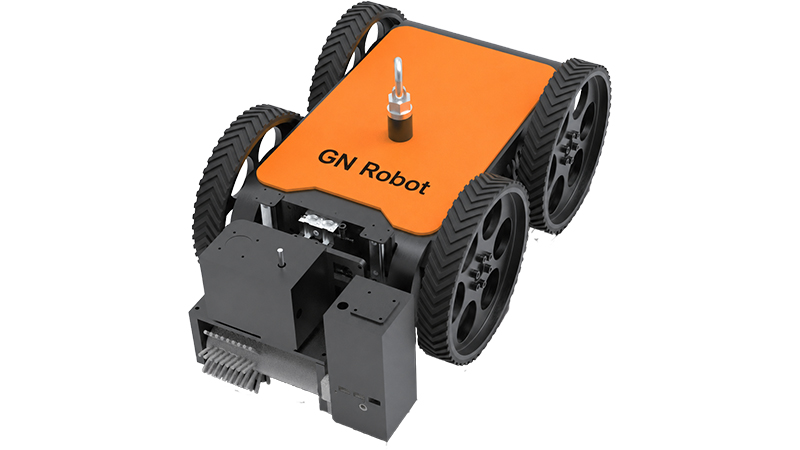
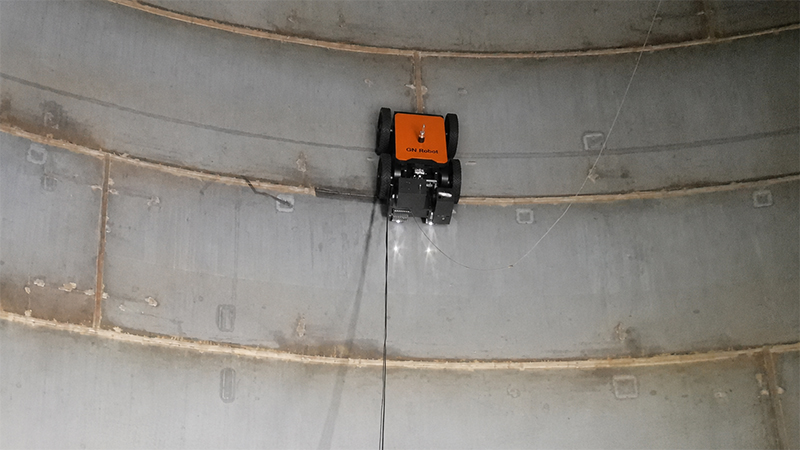
GN Grinding Robot is a magnetic wall-climbing system designed for weld seam grinding, localized corrosion removal, spot repair and surface finishing during the fabrication and maintenance of large steel storage tanks. The robot carries the grinding tool directly on the tank wall, reducing the need for operators to perform continuous high-altitude grinding from scaffolds or aerial platforms.
The platform can be equipped with high-speed grinding wheels, wire brushes or other suitable finishing tools. Depending on configuration, laser and vision-based weld tracking can help the robot follow weld lines while a compliant grinding mechanism maintains controlled contact force. Adjustable travel speed and grinding pressure allow the process to be tuned for weld bead leveling, coating edge preparation, rust removal or localized surface conditioning.
Customer Challenges
- Tank weld seams may extend for hundreds or thousands of meters and require repetitive grinding during fabrication and repair.
- Manual grinding at height creates safety risks, fatigue, vibration exposure and inconsistent finish.
- Keeping a hand grinder centered on a weld while maintaining stable contact pressure is difficult on long vertical and circumferential seams.
- Over-grinding can damage the parent metal while under-grinding can leave defects or sharp transitions.
- Access equipment and repeated repositioning add time to tank construction and maintenance schedules.
GN Grinding Robot for Storage Tank Solutions
The GN robot magnetically adheres to the steel wall and carries the grinding module across the weld or repair area. The crawler travel speed and grinding force can be controlled, while an optional vision/laser tracking arrangement can assist weld-line following. This helps convert a manual high-altitude task into a controlled robotic process.
The grinding end tool can be selected according to the required finish. Wire brushes are suitable for cleaning and corrosion removal; grinding wheels can be used for weld leveling or heavier material removal. The final tool, pressure and travel speed should be qualified on representative steel and weld samples before full production.

Key Features & Advantages
Magnetic Tank-Wall Mobility: The crawler adheres directly to ferromagnetic tank shells and moves along vertical or large-radius curved surfaces.
Weld Tracking Options: Laser and/or vision tracking can be configured to help maintain alignment with long weld seams.
Controlled Grinding Pressure: A compliant mechanism allows working pressure to be adjusted instead of relying solely on manual force.
Adjustable Travel Speed: Robot speed can be tuned to the required material-removal rate and finish.
Multiple Grinding Attachments: Grinding wheels, wire brushes and other surface-finishing tools can be selected for weld finishing, rust removal or spot repair.
100-200 mm Working Width: The reference treatment width supports focused grinding and localized surface repair.
Remote Operation: The operator can supervise the process from a safer position rather than continuously handling a grinder at height.
Lighting and Visual Monitoring: Integrated lighting/camera options can support setup, weld alignment and process monitoring.
Technical Specifications
| Parameter | Specification / Reference Value |
|---|---|
| Overall dimensions | Approx. 450 x 400 x 800 mm |
| Robot weight | Approx. 70 kg |
| Rated load capacity | 70 kg |
| Travel speed | 0-15 m/min adjustable |
| Protection rating | IP54 |
| Obstacle crossing | Approx. 6 mm weld seam |
| Working width | 100-200 mm |
| Surface suitability | Large vertical steel surfaces; reference tank diameter >=8 m |
| Working tools | Grinding wheels, wire brushes and other configured tools |
| Tracking / monitoring | Laser/vision weld tracking and camera/lighting options by configuration |
Note: Specifications are for reference only. Final configuration is subject to engineering confirmation and project requirements.
Typical Applications
Storage Tank Weld Grinding: Grinding and smoothing vertical and circumferential weld seams during large steel tank construction.
Weld Repair Preparation: Localized grinding before inspection, repair welding or coating touch-up.
Rust and Coating Edge Removal: Mechanical cleaning of localized corrosion, coating edges and repair areas.
Steel Fabrication Surface Finishing: Robotic finishing on large magnetic steel structures where access and geometry are suitable.
Customer Benefits
- Reduce long-duration manual grinding at height.
- Improve consistency of grinding pressure and travel speed.
- Support more repeatable weld finishing over long seams.
- Reduce operator fatigue and vibration exposure.
- Shorten access-equipment time on large tank construction projects.
- Enable better process monitoring and documentation when vision systems are used.
Information Needed for Selection & Quotation
- Weld type, weld width/height and required final contour.
- Steel grade and plate thickness.
- Tank diameter, seam orientation and obstacle geometry.
- Required grinding depth, surface finish or repair procedure.
- Preferred grinding wheel, wire brush or tool type.
- Need for vision/laser seam tracking and camera monitoring.
- Dust collection, spark control and fire-safety requirements.
- Power supply, working height and fall-arrest arrangement.
Frequently Asked Questions
Can the robot automatically follow weld seams?
A laser/vision tracking configuration can assist weld following. The exact tracking performance depends on weld geometry, lighting, surface condition and camera/laser setup.
Can it grind circumferential welds on a tank?
Yes, on suitable large-radius steel tank surfaces, subject to curvature, attachments and access. Drawings or photos should be reviewed before selection.
What grinding tools can be used?
The robot can be configured with grinding wheels, wire brushes or other appropriate tools. Tool choice depends on material-removal rate and required surface finish.
How do you prevent over-grinding?
Grinding force, travel speed and tool selection are controlled and should be qualified on a representative sample. Visual monitoring or tracking can further improve process control.
Is this only for new tank construction?
No. It can also be used for localized maintenance, corrosion removal, repair preparation and coating touch-up work on suitable steel structures.
Talk to GN Smart Control
Send GN the tank diameter, weld drawings, photos, steel thickness, required grinding result and project height. We can recommend the crawler configuration, grinding tool, tracking option and process parameters for your tank fabrication or maintenance job.