
Spray Painting Robot
Spray Painting Robot for Ship Hulls & Storage Tanks
Description
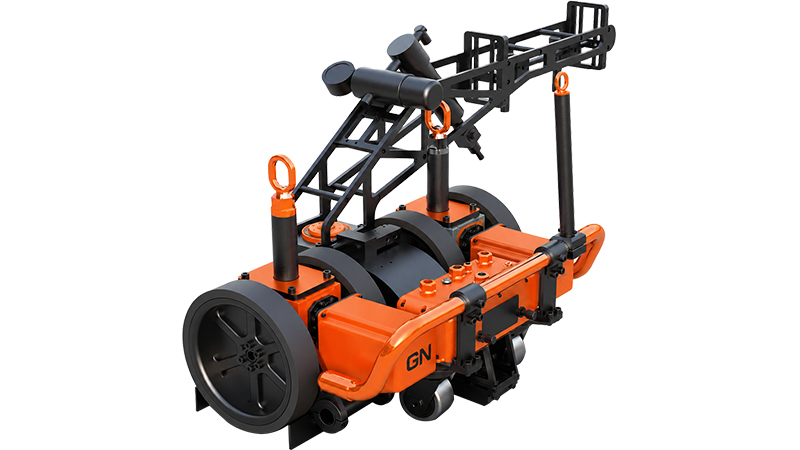
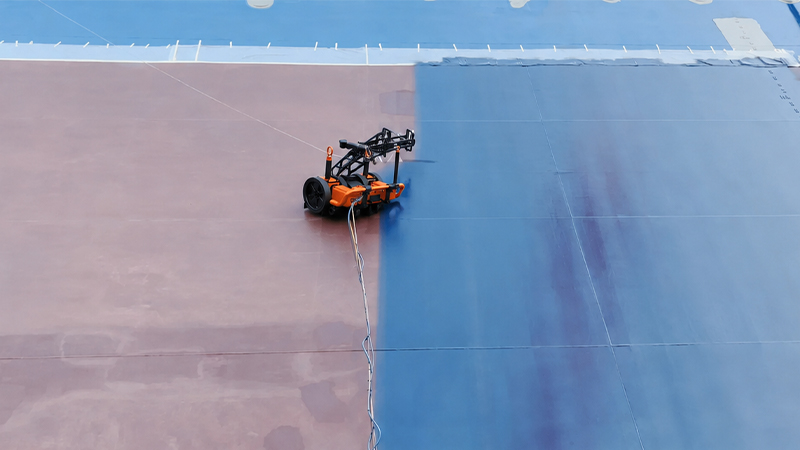
GN Spray Painting Robot is a magnetic wall-climbing robotic coating platform developed for high-altitude airless spraying on ship hulls, steel storage tanks, large process vessels and other ferromagnetic steel structures. Instead of sending painters onto scaffolds, suspended platforms or aerial lifts for long periods, the robot carries the spray application equipment directly on the steel surface while the operator remains in a safer control position.
The robot combines permanent magnetic adhesion, controlled travel speed, adjustable spraying width and programmable lane-change operation. Stable crawler motion helps maintain a repeatable spray path and overlap, supporting more uniform coating application across large areas. The platform is particularly suitable for shipbuilding, ship repair, tank construction and industrial corrosion-protection projects where access cost, working-at-height risk, overspray and coating consistency are major concerns.
Customer Challenges
- Large ship hulls and tank shells require extensive working-at-height access, often involving scaffolding, cherry pickers or suspended platforms.
- Manual spraying quality can vary with painter speed, gun distance, angle and overlap, making film build less consistent over very large areas.
- Overspray and excessive overlap increase paint consumption and cleanup requirements.
- Frequent repositioning of access equipment slows production and can interfere with other trades in a shipyard or tank construction site.
- Coating work may need to be completed within limited weather, docking or shutdown windows, increasing pressure on productivity and repeatability.
GN Spray Painting Robotic Solution
The GN robot adheres to magnetic steel surfaces and travels vertically or horizontally while carrying the spraying frame and airless spray guns. The operator controls travel and coating parameters from a safer position. A one-click lane-changing function can be used to shift the robot to the next spray track with a controlled overlap, helping build a systematic coating pattern over large flat steel areas.
For projects with different coating materials, required dry-film thicknesses or geometries, the travel speed, spray width, overlap and spray-system settings can be coordinated during commissioning. The robot can be integrated with a suitable airless paint pump, hose package and coating delivery system according to the customer’s paint specification and site conditions.

Key Features & Advantages
Magnetic Wall-Climbing Mobility: Permanent magnetic adhesion enables stable travel on vertical ferromagnetic steel surfaces such as ship hull plates and tank shells.
Robotic Airless Spray Application: The platform carries automatic spray guns and supports controlled airless coating application over large steel areas.
Adjustable Spray Width: A reference spray width of 600-800 mm supports efficient coverage and can be matched to the selected spray tip and coating process.
Controlled Overlap and Lane Changing: Programmable lane changes help maintain repeatable spray overlap and reduce the variability associated with manual repositioning.
High Travel Speed: Robot travel speed is adjustable up to 30 m/min, providing flexibility between positioning and coating operations.
Reduced Paint Waste Potential: More consistent path control and overlap can reduce unnecessary overspray and excessive coating overlap. Supplied reference material reports paint savings of 20% or more under suitable conditions.
Remote Operation and Fall Protection: Operators can remain away from the active working-at-height area. A secondary fall-arrest arrangement should be used in accordance with the project safety plan.
Application-Focused Integration: GN can configure the robot, spray frame, hose management and controls around the customer’s coating specification, steel geometry and project workflow.
Technical Specifications
| Parameter | Specification / Reference Value |
|---|---|
| Overall dimensions | Approx. 570 x 1530 x 500 mm |
| Robot weight | Approx. 78 kg including spraying accessories |
| Rated load capacity | 100 kg |
| Travel speed | 0-30 m/min adjustable |
| Protection rating | IP54 |
| Obstacle crossing | Approx. 6 mm weld seam |
| Spray width | 600-800 mm reference range |
| Surface suitability | Large vertical ferromagnetic steel surfaces; project geometry to be confirmed |
| Control / operation | Remote controlled; automatic lane-change function available |
| Reference paint saving | >=20% reported in supplied application material; actual results vary by coating and setup |
Note: Specifications are reference only. Final configuration is subject to engineering confirmation and project requirements.
Typical Applications
Ship Hull Painting: Airless application of anticorrosive, intermediate and finishing coats on large accessible steel hull areas during newbuilding or repair.
Storage Tank Exterior Coating: Robotic coating of tank shells to reduce scaffold dependence and improve consistency over repetitive vertical passes.
Large Steel Vessel and Silo Coating: Surface coating of large ferromagnetic vessels and steel process equipment where magnetic adhesion and access geometry are suitable.
Steel Structure Maintenance: Maintenance coating on large plate structures, selected bridge steelwork and other industrial steel surfaces after engineering review.
Customer Benefits
- Reduce prolonged personnel exposure to work at height and active spray zones.
- Improve repeatability of travel speed, spray path and overlap.
- Reduce dependence on scaffolding or frequent aerial-lift repositioning on suitable areas.
- Support lower overspray and better paint utilization through controlled coverage.
- Improve project planning by turning large repetitive coating areas into a more standardized robotic process.
- Enable operators to focus on setup, monitoring, quality control and localized manual touch-up rather than continuous high-altitude spraying.
Information Needed for Selection & Quotation
- Steel structure type: ship hull, tank shell, vessel, bridge plate or other structure.
- Surface geometry: flat/curved, minimum radius or tank diameter, weld seam height and obstacles.
- Total coating area, working height and access/launch points.
- Coating system: primer/intermediate/topcoat/antifouling, viscosity, solids content and required film thickness.
- Airless pump model or required GN-supplied spraying package, hose length and utility availability.
- Required spray width, target production rate and preferred overlap.
- Site safety requirements, hazardous-area classification if applicable, and fall-arrest arrangement.
- Power supply, ambient conditions, expected wind exposure and project schedule.
Frequently Asked Questions
Can the robot paint curved ship hulls and tank shells?
The robot is intended for large steel surfaces and can work on suitable curves, but minimum curvature, weld geometry and obstacles should be reviewed from drawings or site photos before selection.
Does the robot replace all manual painting?
It is best used for large repetitive areas. Corners, attachments, narrow strips, edges and complex details may still require manual coating or separate tools.
Can it use our existing airless paint pump?
In many projects the robot can be integrated with a compatible customer-supplied airless system. GN should confirm pump pressure, flow, hose routing, gun/tip selection and control interface.
How does robotic spraying reduce paint consumption?
The main mechanism is controlled travel, gun position and overlap, which helps avoid excessive overlap and inconsistent spray movement. Actual savings depend on the coating and job setup.
Is a safety rope still required?
Yes. Even with magnetic adhesion, a secondary fall-protection arrangement is recommended and should comply with the site’s lifting and working-at-height safety requirements.
Talk to GN Smart Control
Tell GN the structure dimensions, coating system, target film thickness, painting area and site conditions. Our engineering team can recommend the robot configuration, spray-system interface, hose management and operating plan for your project.