
Marine Biofouling Removal Robot
Marine Biofouling Removal Robot for Ship Hull Cleaning
Description
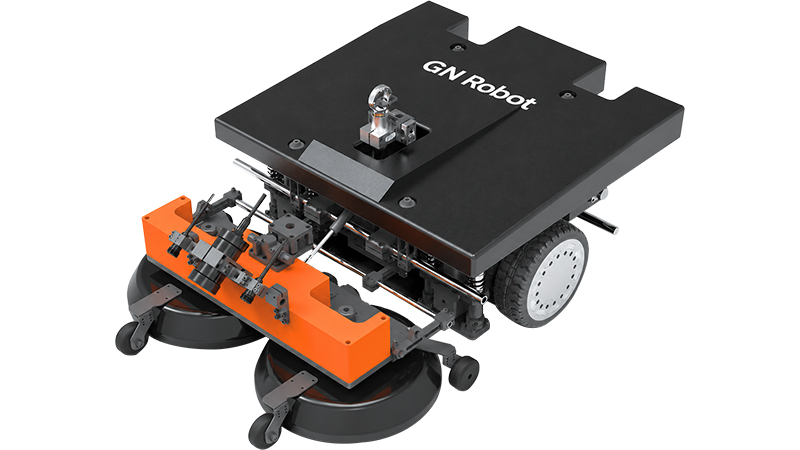
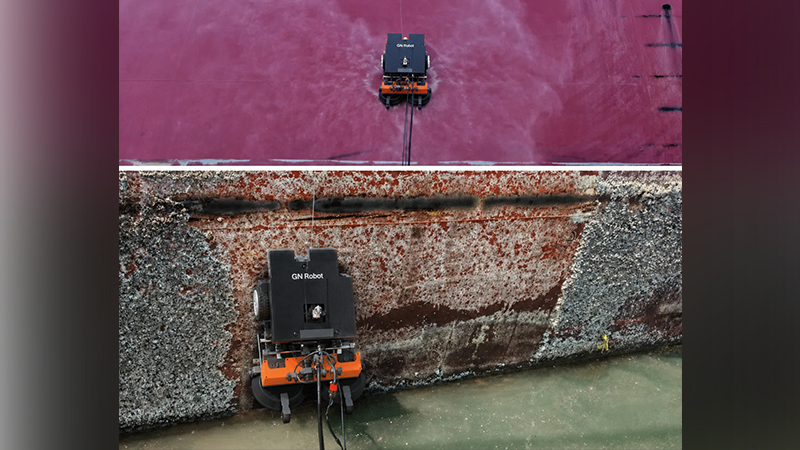
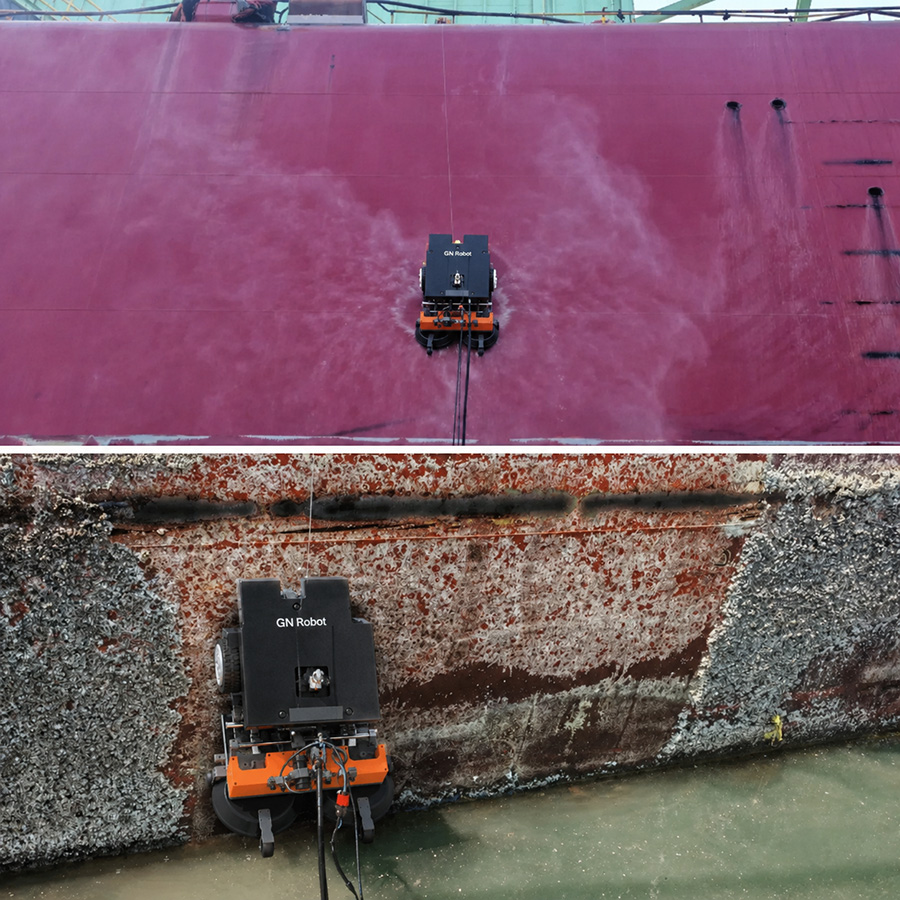
GN Marine Biofouling Removal Robot is an underwater robotic cleaning platform for removing algae, shell growth, slime and other marine organisms attached to ship hull surfaces. The robot is designed for both underwater and above-water hull areas and can be equipped with a cavitation water jet cleaning system or mechanical cleaning tools depending on the fouling level, hull coating condition and project requirements.
By keeping the cleaning tool attached to the hull and allowing remote control from a safer position, the system provides an alternative to labor-intensive diver cleaning and manual waterline work. The reference robot operates at depths from 0 to 20 m, has an 800 mm cavitation cleaning width and supports real-time underwater visual monitoring. It is suitable for shipyards, vessel operators and marine-service contractors seeking a more controlled and repeatable approach to hull biofouling maintenance.
Customer Challenges
- Biofouling increases hull roughness and can contribute to higher hydrodynamic resistance, fuel consumption and emissions.
- Diver-based cleaning requires specialist personnel and creates underwater safety risks, especially near large vessels and port operations.
- Different fouling types require different cleaning energy; an aggressive method may unnecessarily affect the existing antifouling coating.
- Waterline, flat-bottom and curved hull areas can be difficult to access consistently.
- Ports and jurisdictions may have specific rules concerning in-water cleaning, capture of removed material and invasive species management.
GN Marine Biofouling Removal Robotic Solutions
The GN robot travels along the ship’s ferromagnetic hull while the operator controls movement and cleaning remotely. For marine growth removal, the robot can be fitted with cavitation water jet equipment or a mechanical cleaning module. Cavitation cleaning uses controlled water-jet cavitation close to the surface to detach fouling; mechanical tools can be selected when brushing or scraping is more appropriate.
A camera provides real-time underwater visibility for navigation and cleaning assessment. Because hull coatings, fouling levels and environmental requirements vary widely, GN recommends selecting the cleaning head and process after reviewing coating type, vessel condition and local port regulations. The goal is to remove the required fouling with the least aggressive effective process.

Key Features & Advantages
Underwater Hull-Crawling Operation: The robot is designed for marine use and can work from the waterline down to a reference depth of 20 m.
Cavitation Water Jet Cleaning: An optional cavitation cleaning module provides an 800 mm reference cleaning width with approximately 80 L/min water flow.
Mechanical Cleaning Option: Brush or mechanical cleaning tools can be selected for different types and severities of marine growth.
Real-Time Underwater Video: A camera system supports navigation, cleaning verification and remote supervision.
Large-Hull Curvature Adaptation: The reference platform is suitable for hull surfaces with curvature radius greater than approximately 2 m.
Remote Operation: The cleaning task can be performed with reduced reliance on divers directly holding cleaning tools against the hull.
Modular Cleaning Process: The robot can be configured according to fouling type, coating condition and environmental constraints.
Above- and Below-Water Coverage: The platform can support cleaning across waterline transitions and accessible hull areas, subject to launch/recovery arrangement and site conditions.
Technical Specifications
| Parameter | Specification / Reference Value |
|---|---|
| Overall dimensions | Approx. 1230 x 800 x 520 mm |
| Robot weight | Approx. 120 kg |
| Travel speed | 0-10 m/min adjustable |
| Working depth | 0-20 m reference range |
| Hull curvature | Reference radius >2 m |
| Cavitation cleaning width | 800 mm |
| Cavitation water flow | Approx. 80 L/min |
| Cleaning tools | Cavitation water jet or mechanical cleaning module |
| Visual monitoring | Underwater camera; product manual references 2 MP / 2.8 mm lens configuration |
| Surface | Ferromagnetic ship hull steel; coating and geometry must be confirmed |
Note: Specifications are for reference only. Final configuration is subject to engineering confirmation and project requirements.
Typical Applications
In-Water Ship Hull Cleaning: Removal of slime, algae and marine growth from submerged hull surfaces where local regulations permit.
Waterline Biofouling Removal: Cleaning of fouling concentrated near the waterline and splash zone.
Pre-Inspection Hull Cleaning: Localized cleaning before visual inspection, coating assessment or underwater survey.
Shipyard / Repair Support: Hull cleaning before docking, coating maintenance or repair activities.
Marine Asset Cleaning: Selected cleaning of other large ferromagnetic submerged steel structures, subject to geometry and environmental review.
Customer Benefits
- Reduce diver exposure to continuous high-force cleaning work on large hull areas.
- Provide a repeatable cleaning width and controlled travel pattern.
- Allow selection between cavitation and mechanical methods to match fouling severity.
- Support real-time visual monitoring and documentation of cleaning progress.
- Improve access to large underwater hull areas and reduce manual tool handling.
- Help ship operators maintain cleaner hull surfaces as part of a planned biofouling-management program.
Information Needed for Selection & Quotation
- Vessel type, hull dimensions, draft and target cleaning area.
- Hull steel material and curvature, including bilge, flat bottom, appendages and obstacles.
- Antifouling coating type, age and current coating condition.
- Biofouling level and dominant organisms: slime, algae, barnacles, shell growth, etc.
- Preferred cleaning method: cavitation water jet, mechanical brush or other tool.
- Port / flag / local requirements for in-water cleaning and capture of removed material.
- Launch and recovery arrangement, tether route, available water/power and operating depth.
- Need for video recording, inspection documentation or pre/post-clean verification.
Frequently Asked Questions
Can the robot clean without divers?
The robot is remotely operated and can reduce diver involvement in active hull cleaning. Depending on the vessel, port and launch/recovery method, divers may still be used for setup, inspection or contingency tasks.
Will cavitation cleaning damage antifouling paint?
Cleaning aggressiveness depends on nozzle design, standoff, operating parameters and coating condition. The process should be qualified against the specific coating system before full-hull use.
Can the robot remove heavy barnacles?
Heavy hard fouling may require a mechanical tool or multiple passes. GN should review photos and fouling severity to recommend the cleaning head.
Can it work in any port?
In-water hull cleaning is regulated differently by ports and countries. The operator must confirm local environmental and biofouling requirements before use.
Can it also inspect the hull?
The onboard camera provides real-time visual monitoring and can support basic visual observation. If formal inspection or measurement is required, additional sensors and inspection procedures should be specified.
Talk to GN Smart Control
Send GN the vessel type, hull coating, fouling photos, draft, target cleaning area, port location and preferred cleaning method. Our team can recommend the cavitation or mechanical cleaning configuration and help plan launch, tethering and operating requirements.