
Surface Roughening Robot
Roughening Robot for Ship Hull & Steel Surface Preparation
Description
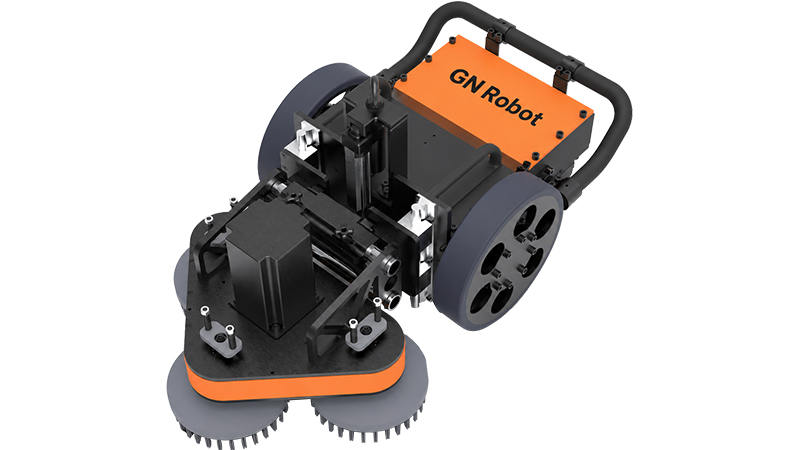
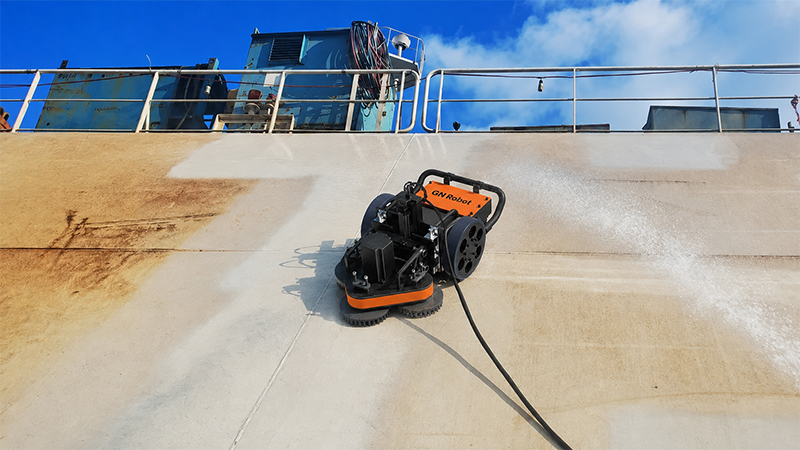
GN Surface Roughening Robot is a magnetic wall-climbing platform for controlled roughening and surface conditioning of ship hulls, storage tanks and other large ferromagnetic steel structures. It is intended for maintenance processes where an existing coating surface needs to be cleaned, abraded or roughened to improve surface condition and provide a suitable mechanical key for subsequent coating work.
The robot combines magnetic adhesion with a flexible adaptive roughening head, adjustable tool pressure and controlled travel. A working width of approximately 520 mm and reference productivity of up to 300 m²/h under suitable light-roughening conditions make it well suited to large repetitive surfaces where manual sanding or roughening is slow, physically demanding and difficult to keep consistent.
Customer Challenges
- Manual roughening of ship hulls and tank shells requires large crews working at height for long periods.
- Maintaining uniform pressure and surface texture by hand is difficult across thousands of square meters.
- Scaffolding, aerial platforms and rope access add time and cost before surface preparation starts.
- Operator fatigue can reduce consistency and productivity during repetitive sanding or brushing.
- Aggressive roughening can damage sound coating, while insufficient roughening can reduce coating adhesion; process control matters.
GN Surface Roughing Robotic Solution
The robot travels directly on the steel structure using permanent magnetic adhesion. Its roughening module uses abrasive wire / grinding-wire tooling and a compliant working head so the tool can maintain contact while the crawler moves over the surface. Travel speed and contact pressure are adjusted to the required level of surface conditioning.
The system is particularly useful for light-to-medium coating roughening before recoating and for large areas where a repeatable finish is required. Heavy roughening productivity will be lower than light roughening, so GN recommends defining the target surface condition and coating-removal requirement during selection.

Key Features & Advantages
Flexible Adaptive Roughening Head: The end tool is designed to follow the steel surface and maintain controlled contact during robotic travel.
Magnetic Adhesion on Vertical Steel: The crawler works directly on large vertical ferromagnetic steel surfaces without continuous manual support.
520 mm Working Width: A broad roughening path supports efficient treatment of large ship hull and tank areas.
Pressure Feedback / Controlled Contact: Process pressure can be adjusted to improve uniformity and reduce excessive material removal.
One-Click Lane Change: Automatic lane shifting helps organize parallel passes and reduce missed areas or unnecessary overlap.
High Productivity: Reference maximum efficiency is approximately 300 m²/h for suitable light roughening conditions.
Remote Operation: Personnel can control the robot from a safer location instead of continuously operating hand tools at height.
Low-Consumable Surface Conditioning: Depending on the tool and process, the system can reduce reliance on disposable abrasive sheets used in manual sanding.
Technical Specifications
| Parameter | Specification / Reference Value |
|---|---|
| Overall dimensions | Approx. 880 x 520 x 350 mm |
| Robot weight | Approx. 68 kg |
| Rated load capacity | 50 kg |
| Travel speed | 0-20 m/min adjustable |
| Protection rating | IP54 |
| Working width | 520 mm |
| Roughening tool | Grinding / abrasive wire disc configuration |
| Surface suitability | Large vertical ferromagnetic steel surfaces |
| Reference efficiency | Up to 300 m²/h for suitable light roughening; heavy roughening will be lower |
| Control | Remote operation; automatic lane-change function available |
Note: Specifications are reference only. Final configuration is subject to engineering confirmation and project requirements.
Typical Applications
Ship Hull Coating Roughening: Light roughening of existing coating before maintenance recoating, subject to coating condition and specification.
Storage Tank Surface Conditioning: Preparation of tank shells before spot repair, overcoating or maintenance coating programs.
Large Steel Plate Structures: Robotic abrasion of wide plate surfaces in shipyards and industrial fabrication facilities.
Pre-Coating Surface Conditioning: Controlled roughening where the goal is to improve mechanical adhesion without full coating removal.
Customer Benefits
- Reduce repetitive manual sanding and brushing at height.
- Improve consistency of surface texture through controlled speed and pressure.
- Increase productivity on large accessible steel areas.
- Reduce access-equipment usage and repeated repositioning.
- Lower worker fatigue and exposure to dust and vibration when combined with suitable dust control.
- Provide a repeatable process that can be qualified against the coating manufacturer’s surface-preparation requirement.
Information Needed for Selection & Quotation
- Existing coating type, age and condition.
- Required operation: light roughening, heavy roughening, coating removal or surface cleaning.
- Target surface profile / roughness or coating manufacturer’s recoat requirement.
- Steel geometry, curvature, weld seams and obstacles.
- Required working width, productivity and working height.
- Dust collection or containment requirements.
- Power supply and remote-control distance.
- Site photos and representative test area for process verification.
Frequently Asked Questions
Is this the same as abrasive blasting?
No. Surface roughening uses a mechanical abrasive/brush tool to condition the surface. Abrasive blasting is a different process used when deeper cleaning, rust removal or a specific blast profile is required.
Can the robot remove all existing paint?
It can remove or abrade coating depending on tool selection and process settings, but full heavy coating removal may be better suited to blasting, UHP water jetting or another dedicated process.
What does up to 300 m²/h mean?
It is a reference maximum for suitable light-roughening work. Heavy roughening, hard coatings, poor surface condition or complex geometry will reduce productivity.
Can it be used before applying antifouling paint on a ship?
It can be used to prepare suitable existing coatings, but the required roughness and compatibility should follow the coating manufacturer’s maintenance/recoating specification.
How do we confirm the right tool?
Provide coating details, photos, required finish and a representative sample if available. GN can recommend abrasive-wire or other tool configurations and test parameters.
Talk to GN Smart Control
Send GN the coating condition, target roughness, total area, hull or tank geometry and required production schedule. We can help select the roughening tool, operating pressure, travel speed and lane pattern for your surface-preparation process.