
Progressing Cavity Pump
Progressing Cavity Pump for Viscous Sludge
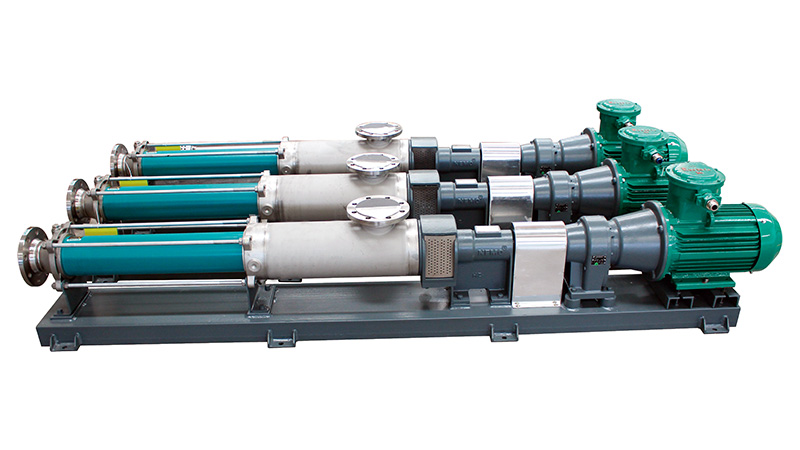

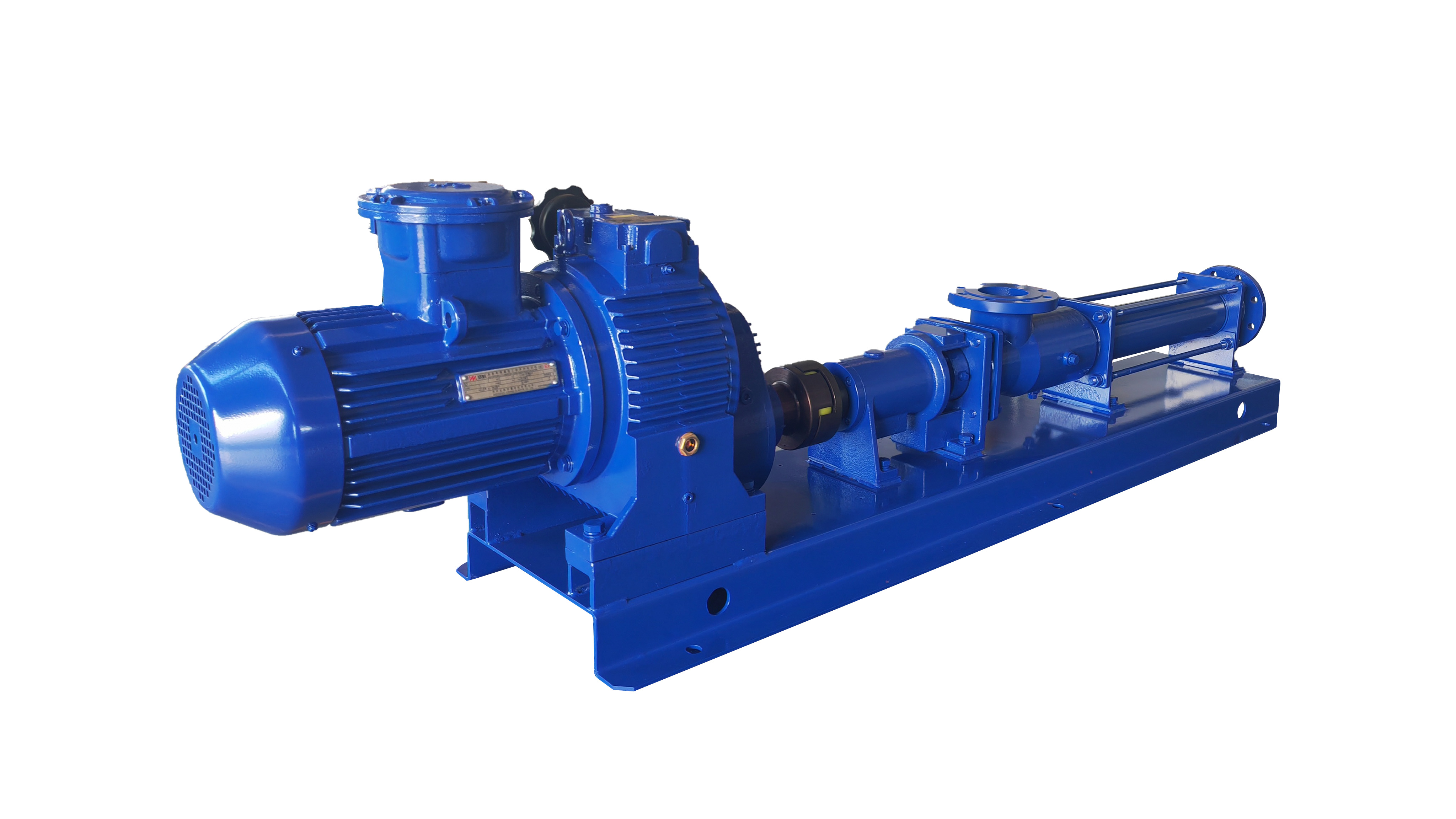
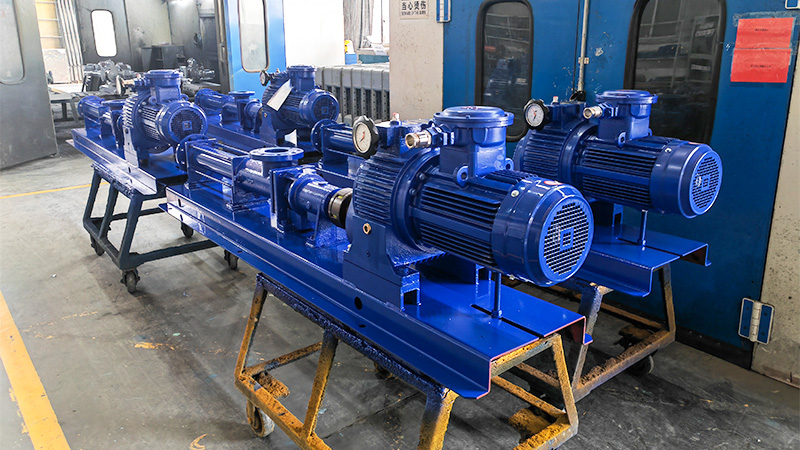
Description
Progressing cavity pumps for viscous sludge, oily waste, polymers, dosing chemicals, and shear-sensitive fluids. These pumps provide smooth flow, stable pressure, and effective handling of high-viscosity media with solids content. The pump range supports dirty water, abrasive slurry, viscous sludge, oily waste, chemicals, drilling fluids, and other demanding media. Selection can be matched to solids content, viscosity, required pressure, installation arrangement, and process continuity requirements.
Technical Specs
| Model | Flow (m3/h) | Pressure (Mpa) | Motor (Kw) | Max Speed (RPM) | Inlet (Inch) | Outlet (Inch) | Weight (Kg) | Dimension: L×W×H(mm) |
|---|---|---|---|---|---|---|---|---|
| GNG10-040C | 10(44GPM) | 0.3 | 4 | 244 | 3 | 3 | 245 | 2245×320×550 |
| GNG20-055C | 20(88GPM) | 5.5 | 210 | 3 | 3 | 323 | 2450×340×562 | |
| GNG30-075C | 30(132GPM) | 7.5 | 258 | 4 | 4 | 386 | 2761×370×600 | |
| GNG40-110C | 40(176GPM) | 11 | 252 | 5 | 5 | 454 | 3270×370×665 | |
| GNG50-110C | 50(220GPM) | 11 | 273 | 5 | 5 | 608 | 3790×400×782 | |
| GNG60-150C | 60(264GPM) | 15 | 225 | 5 | 5 | 649 | 3322×550×740 | |
| GNG70-220C | 70(308GPM) | 22 | 230 | 6 | 6 | 875 | 3740×420×785 | |
| GNG80-220C | 80(352GPM) | 22 | 283 | 6 | 6 | 875 | 3740×420×785 | |
| GNG90-220C | 90(396GPM) | 22 | 205 | 6 | 6 | 875 | 3740×420×785 | |
| The above specification and parameters for reference only. | ||||||||
Key Features
- Options available for abrasive, viscous, corrosive, or solids-laden media
- Selection can be aligned with flow, head, solids content, viscosity, and duty cycle
- Suitable for transfer, recirculation, feeding, dewatering, dosing, and high-pressure service
- Can be supplied as bare pump or integrated with motor and control system
Typical Applications
sludge transfer, centrifuge or filter press feed, polymer dosing, oily waste transfer, viscous chemical pumping, and shear-sensitive media handling
Selection Information Required
- medium type, viscosity, solids content, temperature, and chemical compatibility
- required flow, discharge pressure, suction condition, and duty cycle
- rotor and stator material requirement, seal arrangement, and hopper or auger need
- motor type, speed control need, installation layout, and connection size